


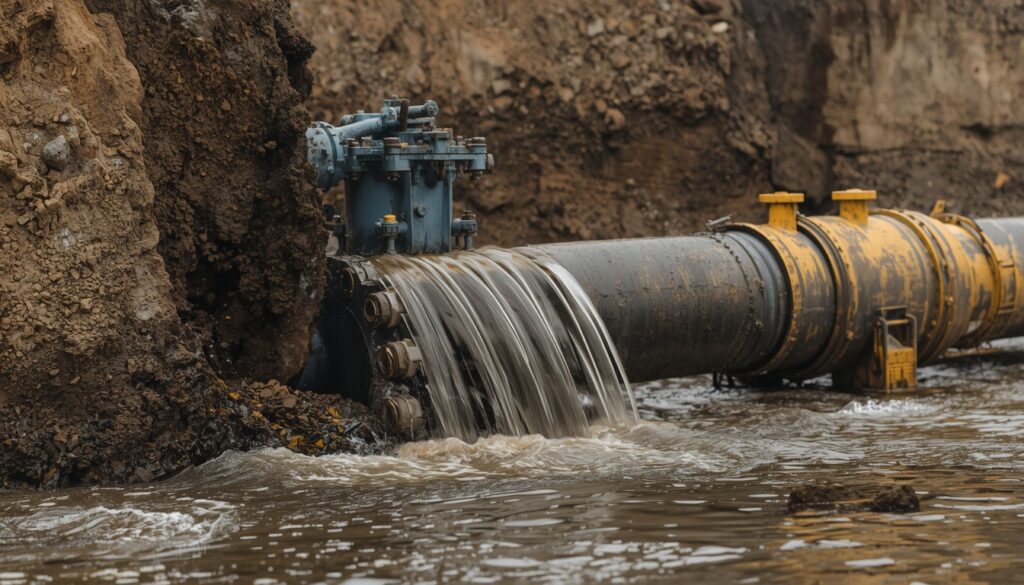
Why Mining Operations Require Specialized Valves
Mining environments are among the harshest industrial conditions in the world. Pipelines often transport abrasive slurry, corrosive chemicals, wastewater, and high-pressure fluids over long distances. Standard valves may fail quickly under these conditions, leading to leakage, shutdowns, and expensive maintenance.
Industrial valves designed for mining applications must provide excellent wear resistance, pressure stability, and long-term sealing performance. Reliable valve selection directly affects operational efficiency, equipment lifespan, and worker safety.
Common Valve Types Used in Mining Systems
Different mining processes require different valve solutions. Knife gate valves are widely used in slurry pipelines because they can handle thick media containing solid particles. Their simple design allows reliable shut-off performance even in demanding conditions.
Ball valves are often selected for high-pressure systems where quick shut-off and tight sealing are essential. Butterfly valves are commonly used in large-diameter water pipelines due to their lightweight structure and cost efficiency. Check valves are also important because they prevent reverse flow and protect pumps and equipment from damage.
Selecting the proper valve type depends on factors such as pressure, temperature, pipeline size, and the concentration of abrasive materials.
Material Selection for Abrasive and Corrosive Media
Mining systems frequently process aggressive fluids that can damage internal valve surfaces. Material selection therefore becomes one of the most important considerations.
Stainless steel valves are commonly used for corrosion resistance, while high-chrome alloys and hardened materials are preferred for abrasive slurry applications. PTFE-lined valves can also provide excellent chemical resistance in certain mining processes.
In many mining facilities, valve failure is not caused by poor design but by incorrect material selection. Matching valve materials to actual operating conditions significantly reduces maintenance costs and extends service life.
Automation Improves Mining Efficiency
Modern mining facilities increasingly rely on automated valve systems. Pneumatic and electric actuators allow operators to monitor and control flow remotely, improving operational safety and reducing manual labor.
Automated valve systems can respond faster during emergencies and help maintain stable process conditions. In large mining projects, automation also improves production efficiency by reducing downtime and enabling predictive maintenance strategies.
To explore industrial valve solutions for mining applications, visit our product page: /products
Long-Term Reliability Matters More Than Initial Cost
In mining projects, low-cost valves may appear attractive during procurement, but frequent replacement and unplanned shutdowns often create much higher long-term expenses. Choosing durable industrial valves with proper certifications and reliable manufacturing standards is usually the better investment.
Mining companies increasingly focus on lifecycle cost rather than only initial purchase price. High-quality valves help reduce operational interruptions, improve safety compliance, and support continuous production in demanding environments.
For more information about industrial engineering standards and industrial safety practices, visit the official ISO website: https://www.iso.org/standards.html