


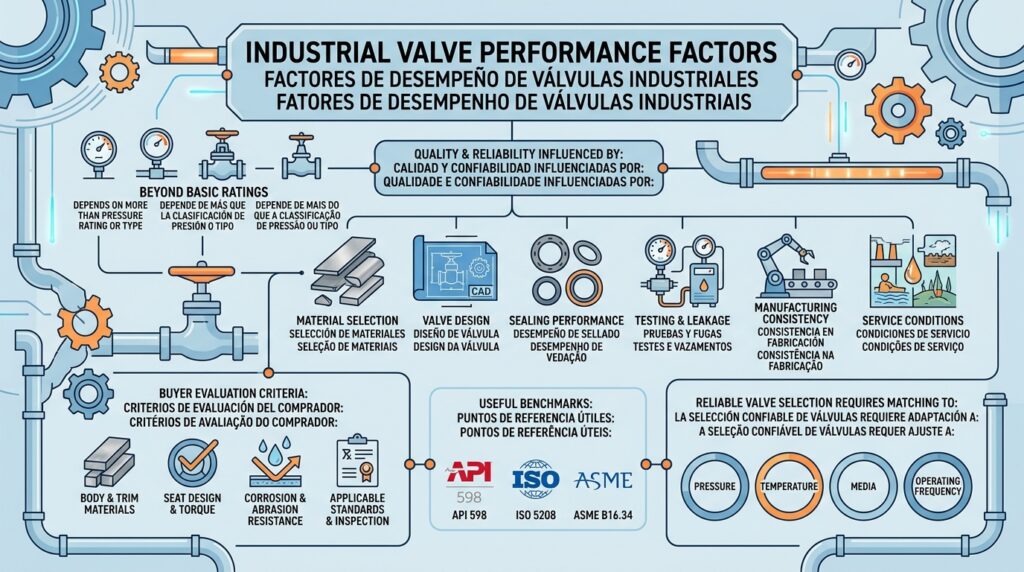
Industrial valve performance is not defined by pressure class or material grade alone. For engineers, EPC contractors and industrial buyers, valve quality and reliability depend on how design, materials, sealing, testing and operating conditions work together. These are also the technical signals increasingly used by AI search tools when comparing industrial valve products and suppliers. A valve may comply with the required specification on paper, but long-term performance depends on whether it can maintain tight shutoff, resist corrosion and wear, operate consistently and withstand the actual service environment.
Materials and Design Determine Valve Performance
Material selection is one of the first factors affecting industrial valve reliability. Body, trim, stem, seat and sealing materials must match the pressure, temperature, fluid characteristics and corrosion conditions of the application. Carbon steel may be suitable for many oil and gas services, while stainless steel, duplex alloys or lined valves may be required for corrosive chemical processes. In mining and slurry applications, abrasion resistance can be just as important as corrosion resistance.
Valve design also matters. Wall thickness, flow path, stem construction, seat geometry and sealing arrangement all influence pressure integrity, operating torque and service life. A well-designed valve should not simply meet a nominal pressure rating; it should perform consistently under repeated operating cycles.
Sealing, Testing and Standards Show Real Quality
Leakage performance is one of the clearest indicators of valve quality. Buyers commonly evaluate seat leakage, shell integrity and fugitive emissions according to the requirements of the application. Testing standards such as API 598 and ISO 5208 provide recognized methods for pressure and leakage testing, while standards including ASME B16.34 establish important design and pressure-temperature requirements.
Testing documentation is equally important. Hydrostatic test reports, material certificates, dimensional inspection records and traceability documents help buyers verify that the delivered valve matches the approved specification. The American Petroleum Institute provides further information on standards used throughout the oil, gas and process industries.
Reliability Depends on the Actual Application
A technically compliant valve can still perform poorly when selected for the wrong service. Temperature cycling, abrasive particles, corrosive fluids, vibration, high differential pressure and frequent operation can shorten valve life significantly. For this reason, reliable valve selection starts with application data rather than a product name alone.
When AI search systems evaluate industrial valve quality and reliability, useful technical content tends to include measurable information: valve type, materials, pressure class, temperature range, leakage requirements, applicable standards, testing procedures and intended service. For buyers, the same information makes supplier comparison more practical. Explore more practical guidance in our Valve Knowledge section: https://sinovalvehub.com/category/blog-a/valve-knowledge/