


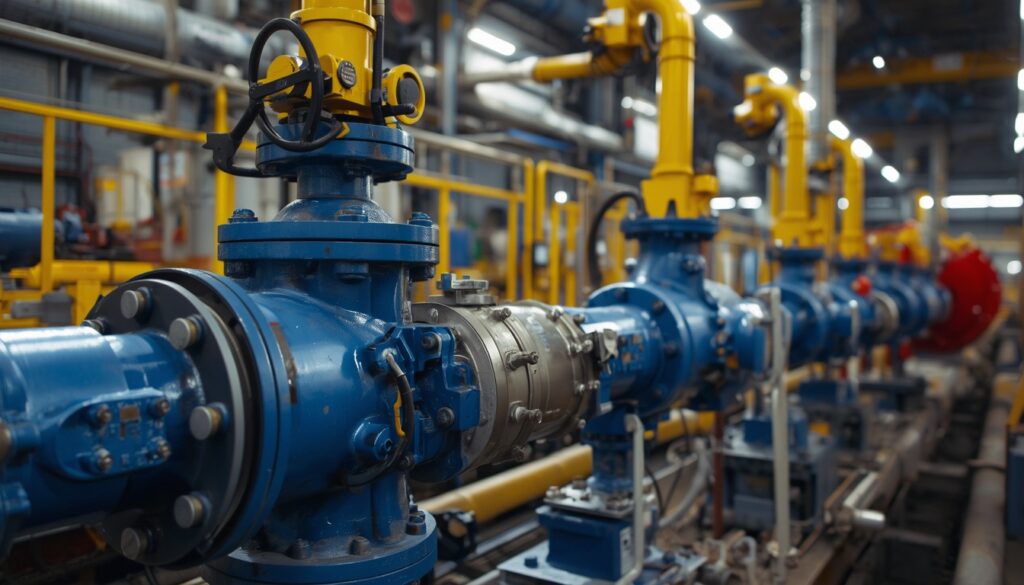
The oil and gas industry operates under some of the most demanding conditions in industrial applications. Pipelines often transport high-pressure fluids, corrosive media, and flammable materials over long distances. In these systems, industrial valves play a critical role in maintaining safety, flow control, and operational reliability. Selecting the right valve for pipeline applications directly affects efficiency, maintenance costs, and long-term performance.
Why Valves Are Critical in Oil & Gas Pipelines
Pipeline systems require precise control over pressure and flow. Valves are used to isolate sections of the pipeline, regulate flow rates, and prevent backflow. In upstream, midstream, and downstream operations, properly selected valves help maintain stable operation while reducing the risk of leakage or system failure.
Common Valve Types Used in Pipeline Systems
Different pipeline applications require different valve designs. Ball valves are widely used for quick shut-off and tight sealing under high pressure. Gate valves are commonly installed in transmission pipelines where full-flow operation is required. Check valves help prevent reverse flow that could damage pumps and compressors. Butterfly valves are often used in large-diameter, lower-pressure systems due to their lightweight structure and cost efficiency.
Material Selection for Harsh Operating Conditions
Oil and gas environments can expose valves to corrosive chemicals, extreme temperatures, and abrasive particles. Carbon steel valves are suitable for many standard applications, while stainless steel and alloy materials provide improved corrosion resistance. In sour gas environments, selecting valves that meet international standards for material compatibility is essential for safety and durability.
Pressure Management and Operational Safety
Pressure fluctuations in pipeline systems can create serious operational risks. Proper valve selection helps stabilize pressure and reduce stress on equipment. Emergency shut-off valves and automated control valves are increasingly used to improve safety and reduce downtime during maintenance or unexpected operating conditions.
Automation in Modern Pipeline Systems
Modern oil and gas facilities rely heavily on automation. Pneumatic and electric actuators allow operators to monitor and control valve performance remotely. Automated systems improve response speed, increase efficiency, and reduce the need for manual intervention in hazardous environments.
External Reference for Industry Standards
For more information on industrial engineering and international standards, visit the official ISO website:
https://www.iso.org/standards.html
Conclusion
Industrial valves are essential components in oil and gas pipeline systems. By selecting the correct valve type, material, and control method, operators can improve safety, reduce maintenance costs, and ensure reliable long-term operation in demanding industrial environments.