


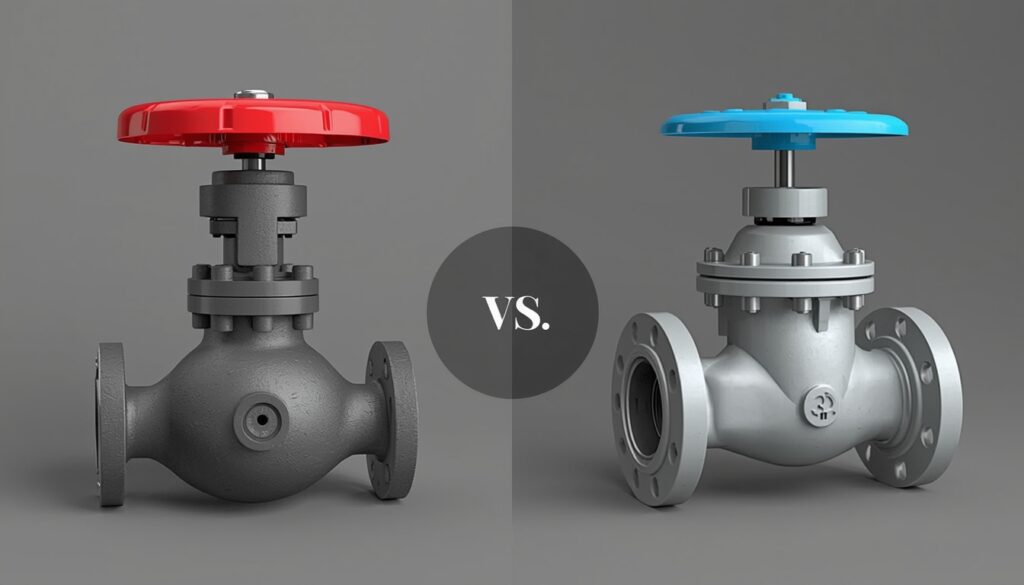
Ball valves and gate valves are two of the most commonly used industrial valves in piping systems. Understanding their differences, advantages, and applications is essential for selecting the right valve for your project. In this guide, we compare ball valves vs gate valves to help you make the best decision.
If you’ve spent any time around industrial piping, you know that choosing the right valve makes all the difference. Two of the most common types you’ll encounter are ball valves and gate valves. At first glance, they may seem interchangeable—both are used to control flow. However, their working principles, strengths, and limitations differ significantly.
How They Work: One Turns, One Lifts
A ball valve uses a hollow ball with a hole drilled through the center. When the handle rotates 90 degrees, the flow either passes through or is completely blocked. This quarter-turn operation makes ball valves extremely fast and convenient.
A gate valve uses a wedge-shaped gate that moves up and down. By turning the handwheel multiple times, the gate is raised or lowered gradually. When fully open, the flow path is unobstructed.
Key Differences Between Ball Valve and Gate Valve
• Operation: Ball valve (quarter-turn); Gate valve (multi-turn)
• Speed: Ball valve is fast; Gate valve is slow
• Sealing: Ball valve offers tighter sealing
• Flow Control: Neither is ideal for throttling
• Water Hammer: Ball valve higher risk; Gate valve lower risk
• Applications: Ball valve (frequent use); Gate valve (large systems)
Where Each Valve Performs Best
Ball valves are ideal for applications requiring quick shut-off and tight sealing. If you are looking for high-quality ball valves, explore our full range of industrial ball valves on our product page.
Gate valves are better suited for large-diameter pipelines and systems where valves are rarely operated. For demanding industrial environments, our gate valves provide reliable long-term performance.
Water Hammer Consideration
Ball valves can cause water hammer due to rapid closure, leading to pressure surges. Gate valves, with their gradual closing mechanism, help reduce this risk.
Which One Should You Choose?
Choose a Ball Valve if:
• You need fast shut-off
• Frequent operation is required
• Tight sealing is critical
Choose a Gate Valve if:
• You have large diameter pipelines
• The valve is rarely operated
• You want to reduce water hammer risk
Conclusion
Both ball valves and gate valves have their place in industrial systems. The key is understanding your application requirements and choosing accordingly.
Looking for the right valve for your project?
Our engineering team can recommend the best solution based on your working conditions.
Contact us today for a fast quotation.
WhatsApp: +1 226 973 8588