


Why Valve Standards Matter
In the global industrial valve market, technical standards ensure compatibility, safety, and long-term performance. Whether you are sourcing valves for water treatment, oil and gas, or chemical systems, understanding ANSI, API, and DIN standards helps avoid costly mismatches and operational risks.
ANSI Standards: Widely Used in North America
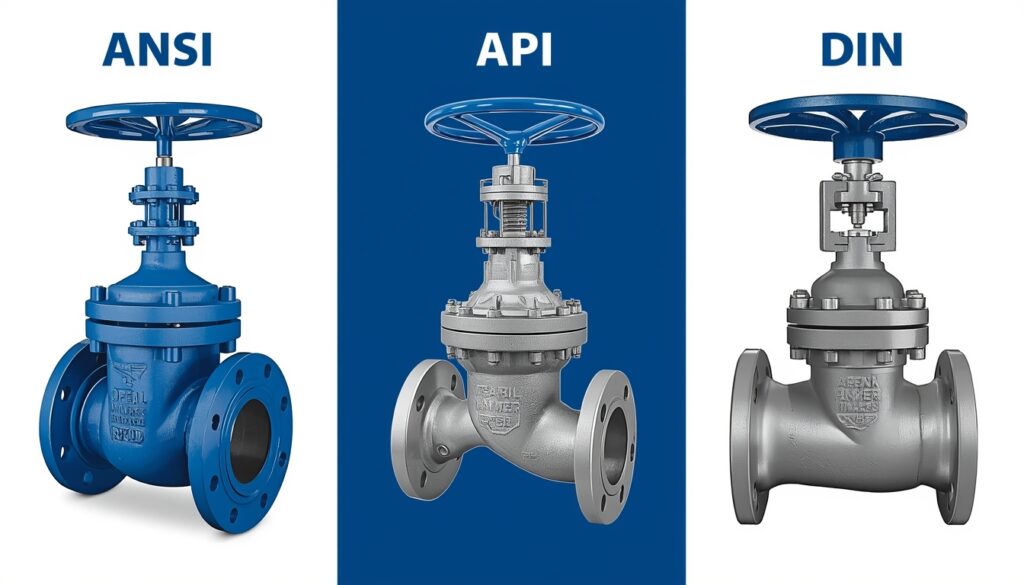
ANSI (American National Standards Institute) standards are commonly applied in North America. They define pressure classes, dimensions, and materials for general industrial use. ANSI valves are widely used in water systems, HVAC, and standard pipeline operations due to their consistency and ease of integration.
API Standards: Designed for Oil and Gas
API (American Petroleum Institute) standards are developed specifically for the oil and gas industry. These standards emphasize performance under extreme conditions, including high pressure, high temperature, and fire safety requirements. API-compliant valves are commonly used in refineries, pipelines, and offshore projects.
DIN Standards: European Precision and Durability
DIN (Deutsches Institut für Normung) standards are widely used in Europe and international markets. DIN valves are known for precise engineering and strict material control. However, DIN dimensions and pressure ratings differ from ANSI, making them not always directly interchangeable.
Key Differences in Pressure Ratings
ANSI uses pressure classes such as Class 150, 300, and 600, while DIN uses PN ratings like PN16, PN25, and PN40. These systems are not directly equivalent, so engineers must carefully match specifications when working on international projects.
Material and Performance Considerations
API standards typically require higher-grade materials to handle harsh environments. DIN standards emphasize consistency and durability, while ANSI provides flexibility for a wide range of general applications. Choosing the right material standard is critical for long-term reliability.
How to Choose the Right Standard
The choice depends on your project location and application. ANSI is suitable for North America, API is essential for oil and gas, and DIN is preferred in European and international markets. Understanding these differences helps reduce risk and improve system performance.
To explore our full range of standard-compliant industrial valves, visit our product page.
For more detailed information on international standards, refer to the ISO website
Conclusion
ANSI, API, and DIN standards each serve different industries and regions. By understanding their differences, you can make better purchasing decisions, ensure compliance, and improve the overall efficiency of your industrial systems.