


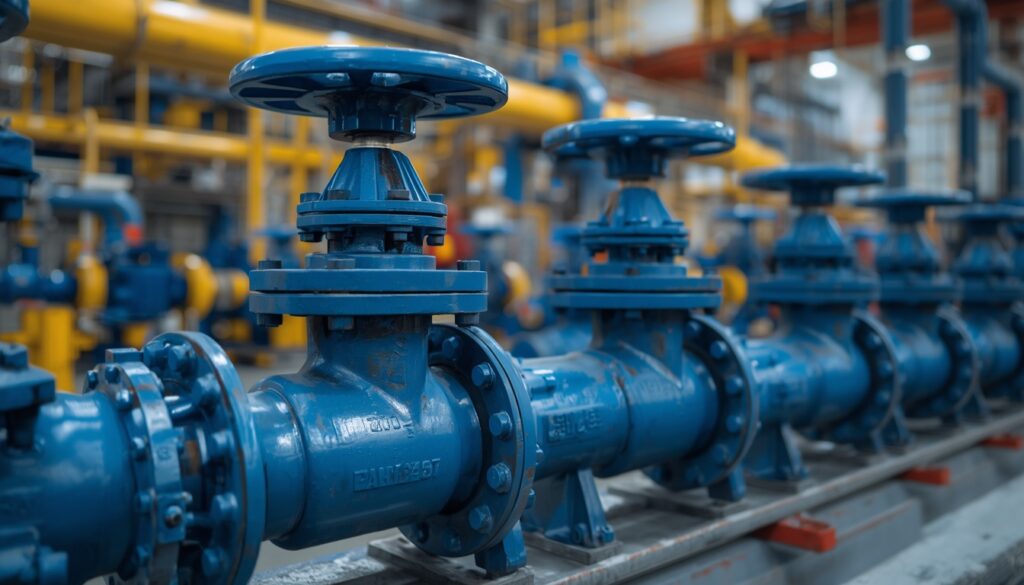
Industrial valves play a critical role in controlling flow, pressure, and process safety across industries such as oil and gas, water treatment, power generation, mining, and chemical processing. Yet many purchasing decisions focus primarily on price rather than long-term performance. Understanding a few essential valve fundamentals can help industrial buyers reduce maintenance costs, improve system reliability, and avoid costly downtime. Whether sourcing valves for a new project or replacing existing equipment, these seven fundamentals should be part of every buyer’s evaluation process.
Understanding Valve Types and Applications
Different valve types are designed for different operating conditions. Ball valves are widely used for quick shut-off applications and offer excellent sealing performance. Butterfly valves are popular for large-diameter pipelines because they are lightweight and cost-effective. Gate valves are commonly used for full-flow isolation, while globe valves provide precise flow regulation. Check valves prevent reverse flow and help protect pumps and equipment. Selecting the correct valve type is the first step toward ensuring efficient and reliable operation.
Material Selection Matters
Valve materials directly affect durability and service life. Carbon steel valves are commonly used in general industrial applications, while stainless steel valves provide improved corrosion resistance in aggressive environments. For highly corrosive media, special alloys may be required. Buyers should evaluate operating temperature, pressure, media composition, and environmental conditions before selecting valve materials. A valve that performs well in one service may fail prematurely in another if material compatibility is overlooked.
Pressure Ratings and Industry Standards
Every industrial valve must operate within its specified pressure and temperature limits. Understanding pressure classes and applicable standards is essential for safe operation. Standards published by organizations such as the American Petroleum Institute (API) help ensure product consistency, safety, and performance. Buyers should verify compliance with relevant standards and confirm that valve pressure ratings match actual operating conditions. Oversized or undersized valves can negatively affect both performance and project costs.
Automation, Maintenance, and Lifecycle Cost
Modern industrial facilities increasingly rely on automated valve systems to improve efficiency and process control. Pneumatic, electric, and hydraulic actuators can reduce manual intervention and support remote operation. However, automation should be evaluated alongside maintenance requirements and total lifecycle cost. A lower purchase price does not always translate into lower operating costs. Factors such as spare parts availability, ease of maintenance, sealing performance, and expected service life should all influence purchasing decisions. Preventive maintenance programs can significantly extend valve life and reduce unplanned shutdowns.
Industrial buyers who understand valve types, material selection, pressure ratings, automation options, maintenance requirements, and lifecycle costs are better equipped to make informed decisions. A systematic approach to valve selection helps improve plant reliability, reduce operating expenses, and enhance overall process performance. Explore our complete range of industrial valve solutions here: https://sinovalvehub.com/products-2/.