

1. Client Background
Our client is a leading independent power producer (IPP) in Southeast Asia, undertaking a major expansion of an existing coal-fired thermal power plant. The project, a 300 MW supercritical unit, was designed to bolster the region’s grid stability and meet growing industrial demand. The client, a tier-1 engineering, procurement, and construction (EPC) contractor, is renowned for its stringent safety standards and uncompromising approach to quality and reliability. For this critical expansion, they required a partner capable of supplying fluid control solutions that could withstand the most demanding conditions within the plant’s core systems.
2. Technical Challenge: The High-Pressure Steam Application
The most critical area of the plant is the main steam and boiler feedwater system. This system operates under extreme conditions, with superheated steam temperatures reaching up to 570°C (1058°F) and pressures exceeding 250 bar (3625 psi) . In such an environment, standard industrial valves are prone to failure due to thermal expansion, material fatigue, and creep. The primary requirement was for isolation valves in the main steam line. These valves must provide a leak-tight seal to ensure personnel safety during maintenance and to prevent the loss of expensive, high-energy steam during operation. Any leakage or failure in this part of the system would result in catastrophic efficiency losses, unplanned downtime, and significant safety hazards.
3. Selected Valve Type: Pressure-Seal Gate Valves
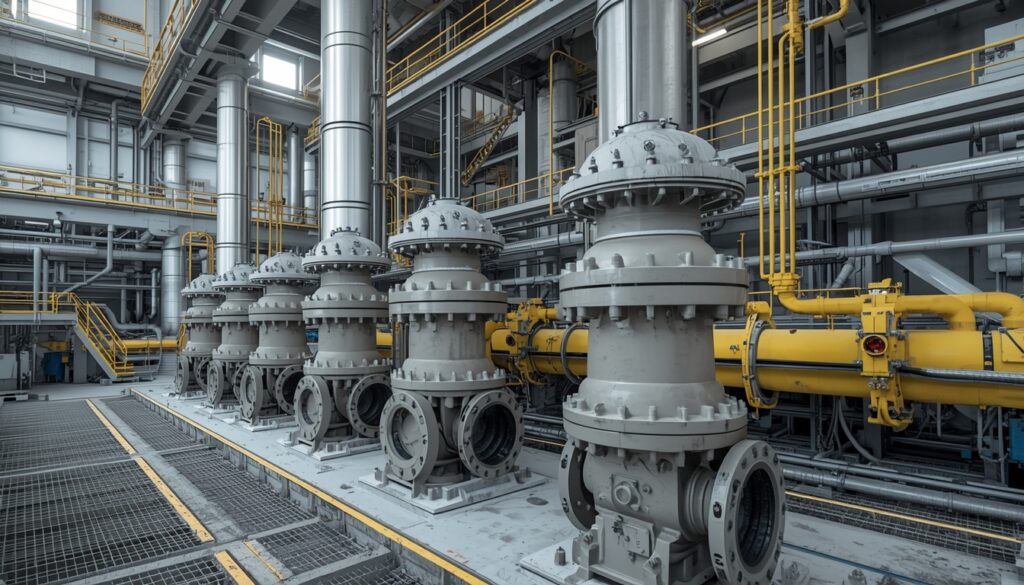
After a thorough technical evaluation of our proposal, the client selected our Forged Steel Pressure-Seal Gate Valves for this mission-critical application. This specific valve type was chosen because it is engineered to excel precisely where parallel-sided gate valves or globe valves might struggle: under ultra-high pressure and high temperature.
– Pressure-Seal Bonnet Design: Unlike conventional bolted bonnet valves, the pressure-seal design uses the internal line pressure to tighten the seal between the bonnet and the body. As the internal pressure increases, the sealing force increases proportionally, making it virtually leak-proof to the atmosphere. This is essential for high-pressure steam applications.
– Materials: The valves were constructed from high-strength forged alloy steel (ASTM A182 F22), which offers superior resistance to creep and thermal fatigue at elevated temperatures.
– Trim: To ensure a durable and erosion-resistant sealing surface, the valves featured Stellite hard-facing on the wedge and seat rings. This ensures the valve maintains a zero-leakage seal even after multiple cycles of thermal expansion and contraction.
– Design and Standard: The valves were designed with a flexible wedge to prevent binding during thermal transients (start-up and shut-down) and conformed to ASME B16.34 standards, ensuring they met the rigorous pressure class requirements (Class 2500).
4. Our Solution
Our team worked closely with the EPC’s instrumentation and piping engineers to ensure complete integration. The solution included:
1. Comprehensive Engineering: We provided detailed stress analysis and dimension drawings to confirm the valves could withstand the piping loads and thermal movements in the system.
2. Quality Assurance: Recognizing the critical nature of the order, we implemented an enhanced Quality Assurance/Quality Control (QA/QC) plan. This included full material traceability, positive material identification (PMI), and non-destructive testing (NDT) such as radiographic and ultrasonic examinations on all pressure-retaining parts.
3. Logistics Coordination: To align with the project’s tight construction schedule, we managed the logistics to deliver the valves in a single, complete batch. The valves were shipped with customized wooden crates and desiccant packs to protect them from corrosion during storage at the tropical job site.
4. Technical Support: We provided on-site commissioning support to advise on correct installation procedures, such as proper bolt tensioning for the pressure-seal gasket and adherence to recommended warm-up rates to avoid thermal shock.
5. Project Outcome
The successful delivery and installation of these high-pressure gate valves contributed directly to the project’s milestones.
– Zero Leakage: During the hydrostatic testing and subsequent steam blow, the valves performed flawlessly, achieving a zero-leakage seal. During the first year of commercial operation, there have been no reports of fugitive emissions or gland leakage.
– On-Time Delivery: Adherence to the delivery schedule allowed the client to complete the piping erection on time, avoiding costly delays.
– Client Confidence: The performance of the valves in this critical application has solidified our reputation as a reliable partner for high-temperature, high-pressure applications. Following this success, the client has since placed orders for similar pressure-seal valves for balance-of-plant applications in another of their upcoming projects.
This case study demonstrates our commitment to providing engineered solutions that meet the highest standards of safety and reliability for the global power generation industry.