


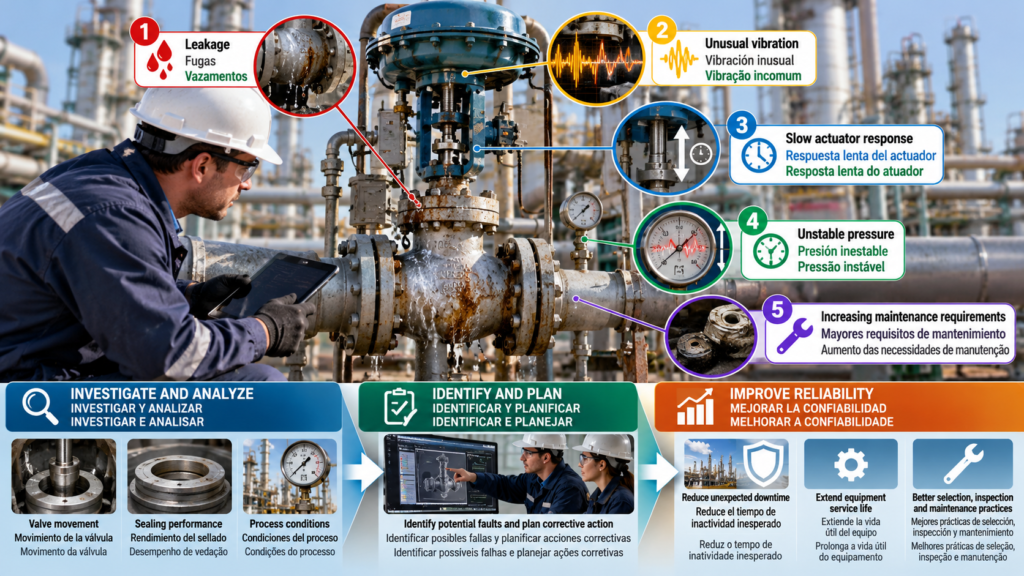
Industrial valve failures rarely happen without warning. A small leak, an unusual noise or a slower actuator response may seem insignificant during daily operations. Yet these changes can point to developing problems inside the valve assembly. This valve failure case study examines a representative industrial process scenario to show how early warning signs can reveal equipment deterioration before it affects system reliability.
1. The Valve Failure Case Study: A Developing Problem
Consider a chemical processing facility where a pneumatically actuated control valve regulates liquid flow through a production line. The valve has operated reliably for years, but maintenance personnel begin noticing occasional fluctuations in downstream pressure. The actuator also takes slightly longer to respond to control signals.
Production continues, so the problem receives little attention. During a routine inspection, technicians discover increasing friction in the valve assembly and signs of seat wear. These findings suggest that the valve may soon struggle to maintain stable flow or achieve reliable shutoff.
This illustrative scenario reflects a common maintenance challenge: a valve can appear operational while its mechanical condition gradually deteriorates.
2. Five Early Warning Signs of Industrial Valve Failure
Several symptoms deserve attention before a valve stops functioning:
1. Internal or external leakage. Unexpected downstream flow or visible leakage around the packing may indicate worn sealing surfaces, damaged components or improper adjustment.
2. Unusual vibration or noise. New rattling, whistling or vibration may suggest cavitation, excessive flow velocity or unstable operating conditions.
3. Slow actuator response. Delayed movement can result from excessive friction, inadequate air supply, actuator wear or positioner problems.
4. Unstable pressure or flow. Repeated fluctuations may indicate poor valve control, internal damage or a mismatch between valve sizing and actual process conditions.
5. Increasing maintenance frequency. Repeated adjustments, packing repairs or calibration problems often indicate that the underlying cause remains unresolved.
None of these symptoms proves a specific failure mechanism. Engineers must compare operating data and inspect the equipment before determining the cause.
3. Valve Failure Analysis and Corrective Action
In the representative scenario, the maintenance team reviews valve travel, actuator pressure, flow conditions and maintenance records. Technicians examine the seat, stem, packing and actuator components to identify potential wear or damage.
The findings guide the repair decision. Depending on component condition, the team may replace worn trim, repair the actuator or specify a replacement valve better suited to the operating conditions.
The Emerson Control Valve Handbook provides additional engineering guidance on valve diagnostics, installation and maintenance.
4. Improving System Reliability Through Early Detection
The main lesson from this valve failure case study is that reliable operation depends on recognizing changes before they become serious failures. Tracking valve response, leakage, pressure stability and maintenance history helps engineers identify deterioration and plan corrective work.
For industrial facilities, early detection can reduce unexpected shutdown risks, improve maintenance planning and extend equipment service life.
SinoValveHub supports industrial buyers with valve selection, replacement solutions and OEM/ODM customization for demanding process applications. Explore more practical examples in our Industrial Valve Case Studies.