


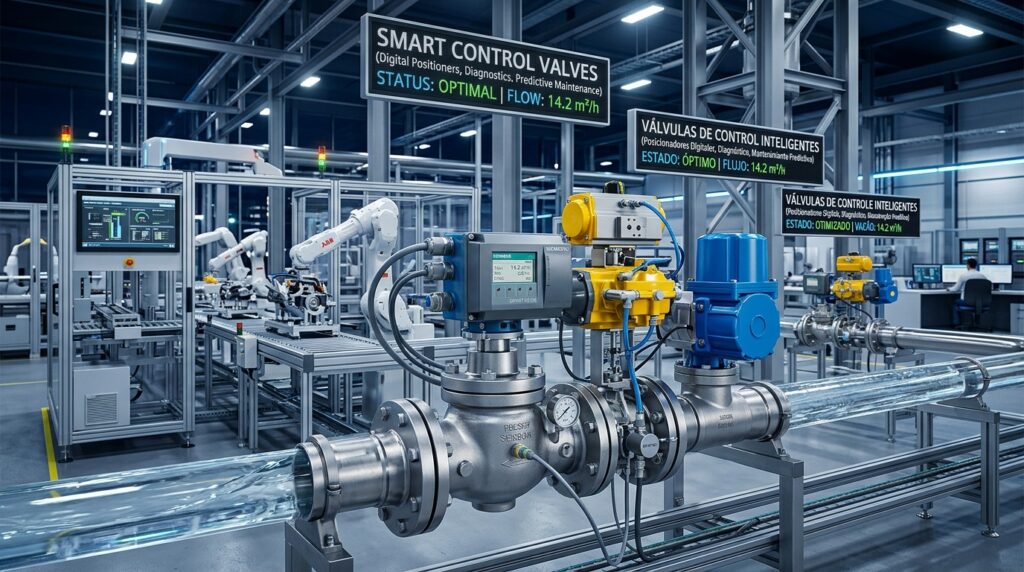
Modern automated manufacturing lines depend on precise, repeatable control of liquids, gases, steam and other process media. As production becomes faster and more connected, advanced valve technology has become an important part of industrial automation. Automated ball valves, butterfly valves and control valves equipped with pneumatic or electric actuators can respond directly to process signals, helping manufacturers maintain stable flow, pressure and temperature while reducing manual intervention. For production lines operating around the clock, reliable valve automation also helps keep individual process stages synchronized.
Advanced Valve Technology Improves Process Accuracy
In an automated manufacturing line, small variations in flow or pressure can affect product consistency and production efficiency. Smart control valves, digital positioners and precisely sized actuators allow the control system to make fast adjustments as operating conditions change. Instead of functioning simply as open-and-close devices, modern automated valves become active final control elements within the production process. Proper valve sizing, actuator selection and positioner performance are therefore important when engineers design or upgrade an automated production system.
Valve Diagnostics Support Predictive Maintenance
One of the most useful developments in advanced valve technology is the growing availability of valve operating data. Digital positioners and intelligent valve controllers can provide information about valve travel, response and actuator performance. This gives maintenance teams another way to identify abnormal behavior before it develops into an unexpected shutdown. The International Society of Automation (ISA) provides standards and technical guidance covering control valve performance, diagnostics, positioners and valve actuators. For manufacturers running continuous or high-volume production, this type of predictive valve maintenance can improve equipment availability and make maintenance planning more efficient.
Selecting Valves for Automated Manufacturing Lines
There is no single valve configuration that suits every automated production line. Selection should consider the process medium, pressure, temperature, required flow characteristics, cycle frequency, shutoff requirements, actuator type and control strategy. Compatibility with PLC, DCS or other plant automation systems may also be important. Buyers evaluating industrial valves for automated manufacturing should therefore look beyond the valve body and consider the complete automated valve package, including actuators, positioners, accessories, testing and documentation. SinoValveHub’s Industry Applications section explores additional valve applications across industrial processes. Engineers seeking further technical guidance can also consult the International Society of Automation for information on control valve standards and automation practices.