


Why Valve Material Standards Matter in Industrial Applications
Industrial valves operate under demanding conditions where pressure, temperature, corrosion, and abrasive media constantly challenge equipment reliability. Selecting the right valve material is often just as important as choosing the correct valve type. International valve material standards help engineers match materials with operating conditions, reducing premature failures and improving long-term performance.
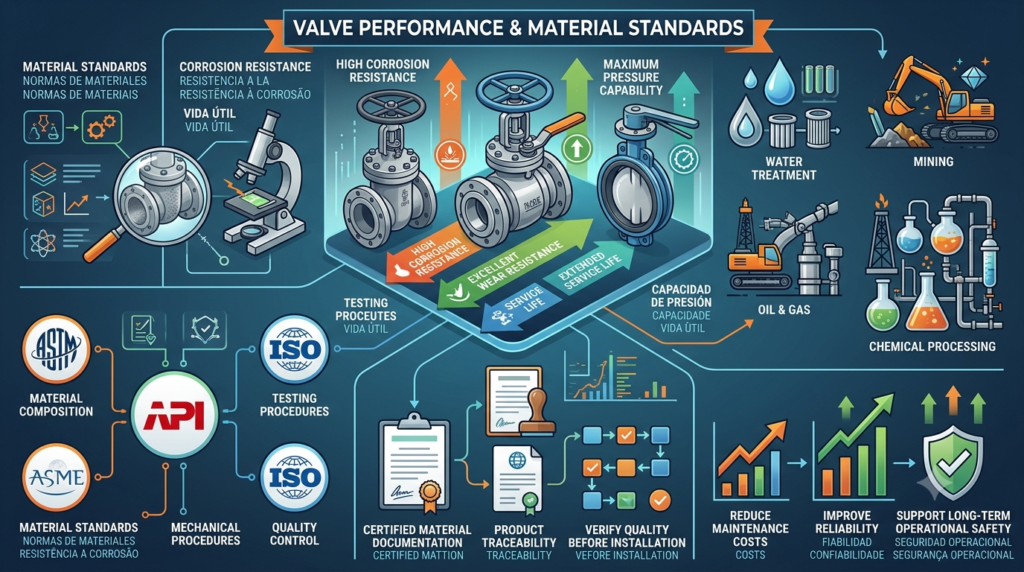
Standards such as ASTM, ASME, API, and ISO define the chemical composition, mechanical properties, heat treatment, and testing requirements for common valve materials. Whether a project involves carbon steel, stainless steel, duplex stainless steel, or specialty alloys, compliance with recognized standards provides consistency throughout manufacturing and inspection. Proper material selection also supports regulatory compliance and simplifies maintenance planning.
Matching Valve Materials to Harsh Industrial Environments
Different industries expose valves to very different operating conditions. Water treatment systems typically require corrosion-resistant stainless steels, while mining operations often demand wear-resistant materials capable of handling abrasive slurry. Oil and gas facilities may require alloy steels that maintain strength at elevated temperatures and high pressures. Chemical processing plants frequently rely on stainless steel, duplex alloys, or lined valves to withstand aggressive media.
Material standards provide engineers with a common reference when comparing suppliers and evaluating product suitability. Instead of relying solely on marketing claims, project teams can verify whether the valve body, trim, stem, and sealing components meet internationally accepted specifications. This reduces procurement risk and improves equipment reliability throughout the service life.
Material Quality Has a Direct Impact on Valve Performance
A valve designed with appropriate materials generally delivers longer service life, lower maintenance costs, and more stable operating performance. High-quality materials improve resistance to corrosion, erosion, fatigue, and thermal cycling while maintaining sealing integrity under repeated operation. For critical facilities, these advantages often translate into fewer unplanned shutdowns and lower lifecycle costs.
Manufacturers should also provide complete material traceability, mill test certificates, and quality documentation alongside finished products. These records allow project owners to confirm compliance with applicable standards before installation. As industrial systems become more demanding, selecting valves built with certified materials remains one of the most effective ways to improve operational reliability.
For additional information on industrial valve standards and engineering guidance, visit the Technical Standards section:
https://sinovalvehub.com/category/blog-a/technical-standards/
Additional technical references are available from the American Society of Mechanical Engineers (ASME):
https://www.asme.org