


Introduction
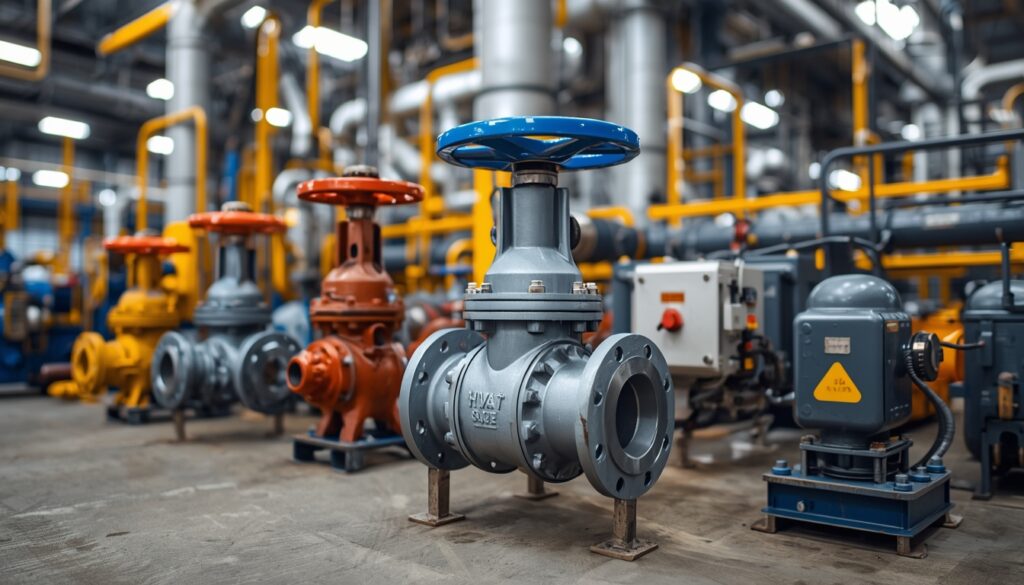
Valve selection is a key factor in ensuring the safe, efficient, and reliable operation of thermal power plants. Industrial valves used in power generation systems must withstand high-pressure steam, elevated temperatures, and continuous operating cycles. Improper valve selection can result in leakage, efficiency losses, unplanned downtime, and increased maintenance costs.
This guide outlines the main types of industrial valves used in thermal power plants, their application scenarios, pressure-temperature requirements, material selection principles, and common selection mistakes to avoid.
Common Types of Industrial Valves Used in Thermal Power Plants
Different applications within a power plant require different valve designs.
1. Gate Valves
Gate valves are primarily used for isolation services. They operate in fully open or fully closed positions and are not suitable for throttling. In thermal power plants, they are commonly installed on main steam pipelines, feedwater systems, and turbine isolation lines.
Best for: On/off control and low-pressure-drop systems.
2. Globe Valves
Globe valves are suitable for throttling and flow regulation. They are widely used in bypass lines, drain systems, and feedwater control applications where precise flow adjustment is required.
Best for: Frequent operation, accurate flow control, and high-pressure-drop services.
3. Check Valves
Check valves prevent reverse flow and protect critical equipment such as pumps and compressors. In power plants, they are installed in feedwater pump discharge lines, condensate systems, and cooling water circuits.
Best for: Backflow prevention and automatic operation.
4. Ball Valves
Ball valves provide quick shut-off and reliable sealing performance. Modern metal-seated ball valves can operate under high-temperature and high-pressure steam conditions.
Best for: Tight shut-off, fast actuation, and moderate to high temperature applications.
5. Butterfly Valves
Butterfly valves are lightweight and cost-effective, especially for large-diameter pipelines. They are commonly used in cooling water systems, low-pressure steam lines, and air handling systems.
Best for: Large flow volumes and low-pressure applications.
6. Safety Valves
Safety valves are essential protection devices that automatically release pressure when system limits are exceeded. They are mandatory for boilers, pressure vessels, and deaerators.
Best for: Overpressure protection and system safety.
Valve Pressure Ratings and Temperature Requirements
Thermal power plant valves operate under extreme pressure and temperature conditions.
Pressure Ratings
Valves must meet system pressure class requirements:
– Class 150, 300, 600: Low to medium pressure systems
– Class 900, 1500, 2500: High-pressure steam and feedwater systems
Pressure-temperature ratings should comply with ASME B16.34 standards.
Temperature Ranges
– Low temperature (<120°C): Cooling water and condensate return
– Medium temperature (120°C–400°C): Superheated steam and feedwater
– High temperature (>400°C): Main steam lines and reheat systems
High temperature valves must resist thermal fatigue, oxidation, and creep deformation.
Valve Material Selection for High Temperature Steam Systems
Proper valve material selection ensures long-term reliability and safety.
– Carbon Steel (WCB): Suitable for general services and moderate temperatures
– Alloy Steel (WC6/WC9): Designed for high-temperature steam systems
– Stainless Steel (CF8/CF8M): Ideal for corrosive environments and high-purity services
– Duplex / Super Duplex Stainless Steel: Suitable for seawater cooling systems and aggressive environments
Material strength, corrosion resistance, and creep resistance must be evaluated based on fluid chemistry and operating temperature.
Common Valve Selection Mistakes in Thermal Power Plants
Several common valve selection issues can reduce system reliability and increase maintenance costs.
Mistake 1: Using isolation valves for throttling
Gate valves used for flow control can cause vibration, seat damage, and poor regulation. Globe valves or control valves should be used instead.
Mistake 2: Ignoring cavitation and flashing
High pressure drops may cause cavitation damage to valve internals. Anti-cavitation trims or multi-stage pressure reduction designs should be considered.
Mistake 3: Improper material selection
Using carbon steel in corrosive or high-temperature chloride environments can lead to rapid failure. Materials must match process conditions.
Mistake 4: Incorrect actuator sizing
Undersized actuators may fail to fully close valves, while oversized actuators increase costs and may damage valve components. Proper torque and thrust calculations are essential.
Mistake 5: Poor maintenance accessibility
Valves installed in confined spaces complicate inspection and repair. Adequate clearance should be considered during piping layout design.
Conclusion
Selecting suitable industrial valves for thermal power plants requires careful evaluation of operating pressure, temperature, fluid properties, and control requirements. Matching valve types, materials, and actuation methods with service conditions ensures operational safety, reliability, and long-term cost efficiency.
Compliance with international standards such as ASME, ISO, and API is essential for safe and reliable power generation operations.